

Les Monstrueuses: upcycling as a creative and circular practice
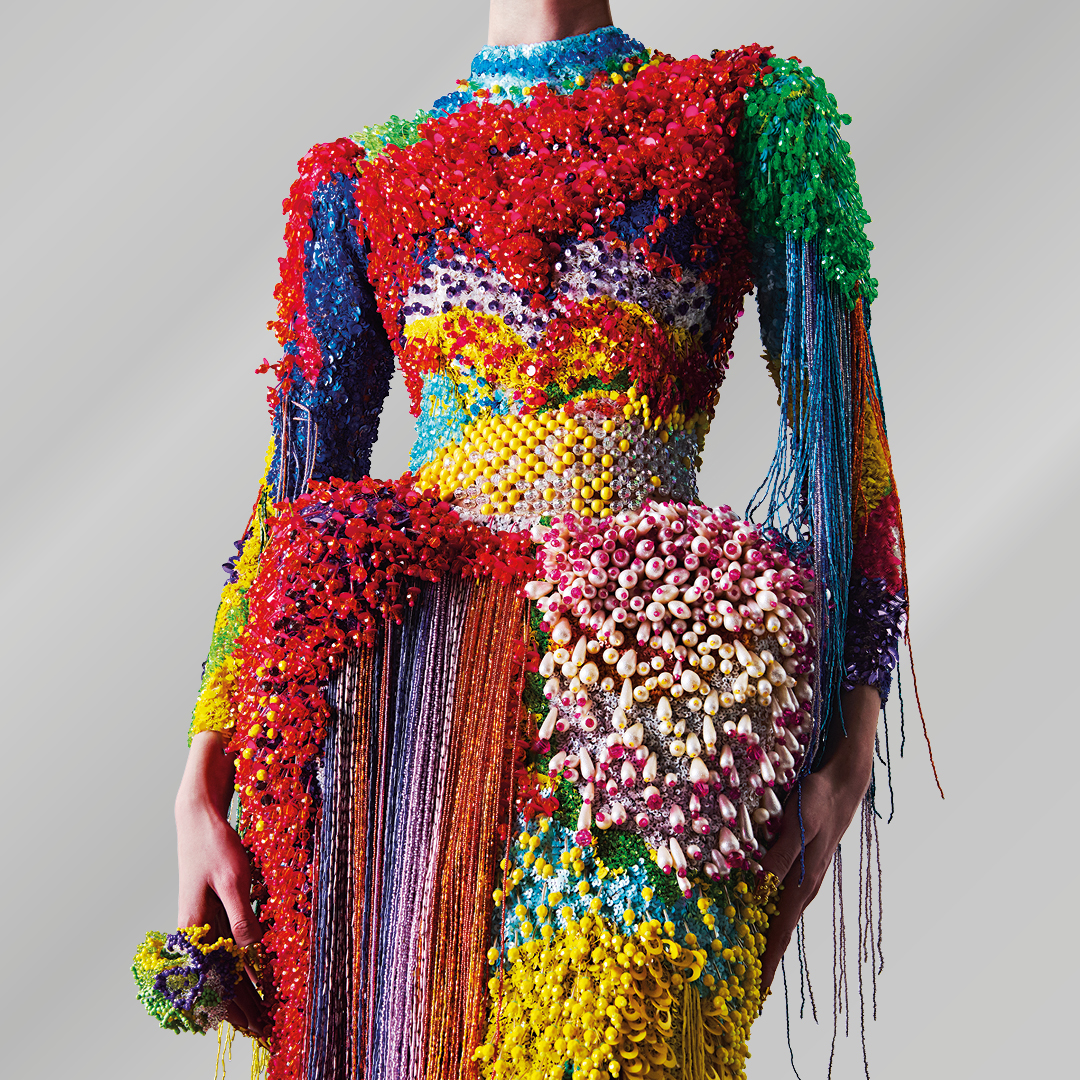
Launched in 2018 by Swiss designer Kévin Germanier, the Germanier brand focuses on upcycling, or reusing an object or material in a way that enhances its original value.
The collapse of the Rana Plaza building in Dhaka, Bangladesh, in 2013, combined with growing awareness of the pollution generated by the textile industry, revealed the need to thoroughly re-examine the fashion production and distribution system. In this context, upcycling is now reemerging as a way forward, no longer as a discreet act of repair, but as a bold and confident stance. Waste, often considered monstrous, is becoming a valued commodity, a vehicle for new forms and practices.
An approach based on reuse and attention to materials
This revaluation of the residual opens the way to a bold artistic approach. Through visually identifiable pieces, Kévin Germanier develops a unique formal language. Far from improvisation, his approach is based on rigorous attention to materials. The constraints associated with their recovery become a driver of innovation, while integrating sustainability imperatives from the design stage of each garment.
Kévin Germanier’s work is based on a logic of reuse, drawing on dormant stocks and materials that have already been produced to create new pieces. The components used are often original, and their transformation is the result of the work of different people. Several of the dresses on display were made from iconic textiles, including knitwear pieces made by knitters from Valais, as well as by artisans from different countries using ethical methods. This diversity highlights the wealth of local and international expertise that has been brought to bear.
Upcycling, collaborations and social dimension
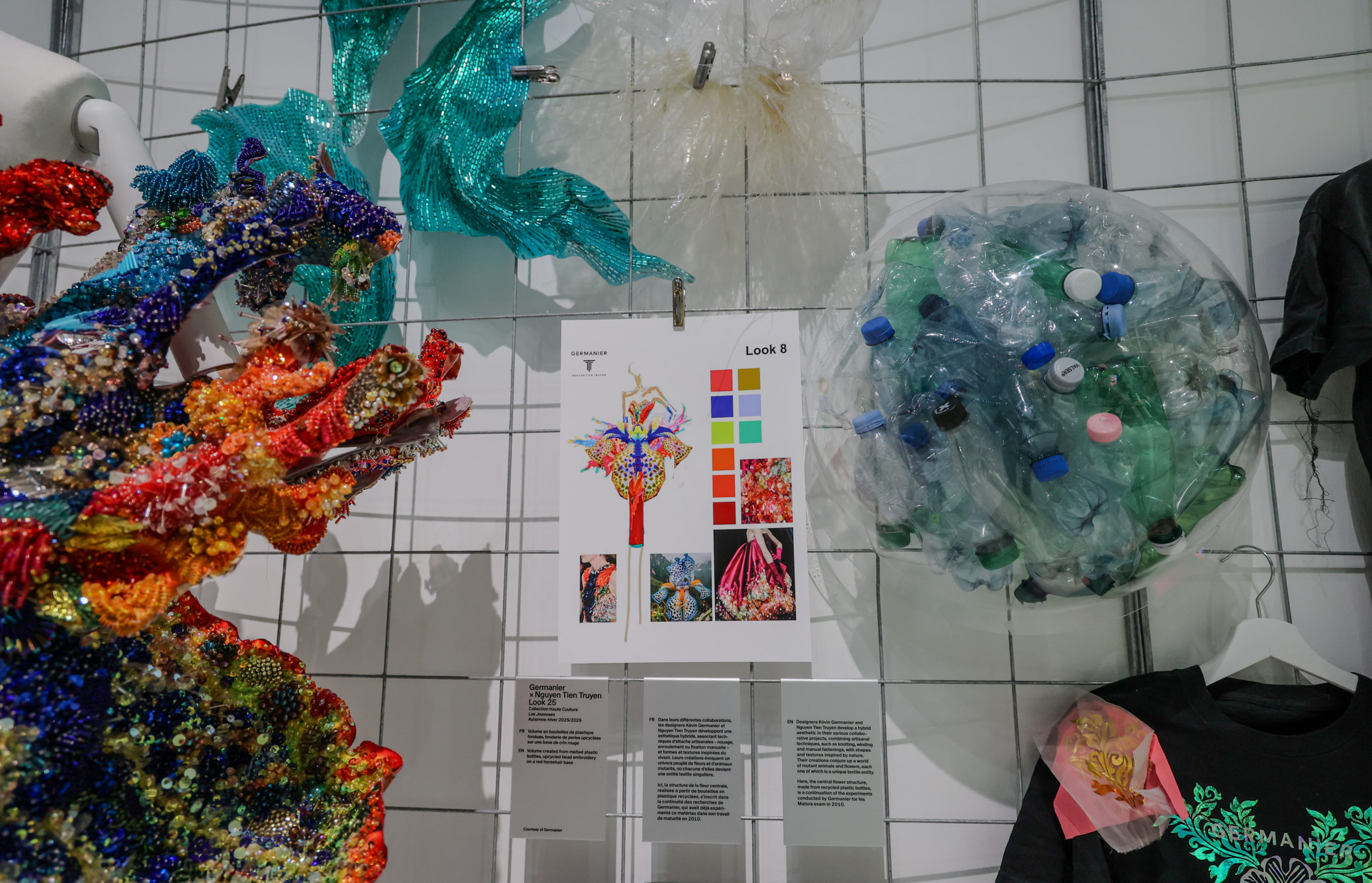
In the Germanstein room, a textile chimera brings together the materials most representative of the designer’s work: surplus beads, discarded sequins, recycled fibers, unsold textiles, and collected fragments. Movable stainless steel elements allow visitors to come into direct contact with the textures of the Germainier collections, revealing the range of resources used and their potential for transformation. This workshop is not the idealized place often associated with Haute Couture, but a constantly evolving laboratory where research can be seen and touched.

The Germanstein room.
© Guillaume Python

The Germanstein room.
© Guillaume Python
Beyond formal and aesthetic experimentation, Kévin Germanier’s approach also has a social dimension. Some collaborations are part of reintegration initiatives based on technical and creative skills related to clothing design. By promoting forms of production often associated with industrial contexts or foreign economies, the exhibition deconstructs certain preconceptions linked to fast fashion and reminds us that artisanal manufacturing that respects human rights can extend beyond European borders, provided that the production channels for each element used are controlled.
A set design that is 95% upcycled
In order to limit waste, recycled, borrowed, or rented materials were prioritized for the scenography. This approach is part of mudac’s commitment to sustainability and aims for almost total circularity, achieving nearly 95% in the context of this exhibition, in line with the Germanier brand.
In the first room, the collections are presented in a space designed using materials associated with the world of fashion. The mannequins are rented, the mirrors are on loan from the Morges School of Construction (mirror section) and will be reused by the students, while the pedestals are taken from a previous exhibition. The carpet, rented for the occasion, reflects the limited availability of recycled materials in the same color.
The second room is also based on reuse. The false ceiling comes from previous exhibitions, while the central structure, inspired by a cabinet of curiosities, was made of wood from joists commonly used by the mudac. Designed to be modular, sturdy, and readily available, this structure will be stored in the museum’s reserves for reuse in future exhibitions.
The following rooms, designed as a laboratory, combine elements that have already been used in several previous exhibitions. Reusing them extends their lifespan while avoiding the production of new devices. The last room, designed entirely by Kévin Germainier, reflects his commitment to upcycling and eco-responsible practices, establishing continuity between the designer’s choices and those of the museum.

The first room.
© Guillaume Python

The second room.
© Guillaume Python

The third room.
© Guillaume Python

The fourth room.
© Guillaume Python
A shared circular practice
Through Les Monstrueuses, upcycling emerges as a central practice that is at once artistic, social, and scenographic. Drawing on existing materials, dormant stocks, and a wide range of expertise, the exhibition highlights another way of thinking about creation, based on the transformation, valorization, and circulation of resources.
This carte blanche reflects a shared vision between mudac and Kévin Germanier: that of contemporary creation that integrates ecological, social, and aesthetic issues, and where reuse becomes a field for experimentation and innovation.