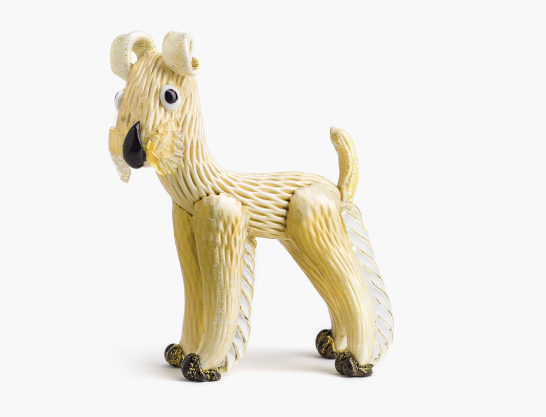


With more than 300 glass animals, from the collection of distinguished art historian and Honorary Director of the Louvre Pierre Rosenberg, and pieces from his donation to the musée du Grand Siècle, the exhibition highlights the delicacy of Murano glass animals while questioning our ambivalent relationship with living beings.
What about us?
24.04 → 27.09.2026

Glass Animals from the Pierre Rosenberg Collection

Through more than 300 glass animals, the exhibition explores the complex and ambivalent nature of our relationship with living beings. The diversity of forms, expressions and behaviours attributed to the animals reflects both our curiosity and desire to understand our environment, and our wish to master its representation and domestication.
A film revealing Pierre Rosenberg’s palazzo in Venice has been specially produced for the occasion. The glass animals appear there in the environment they inhabit, that of their collector, who has taken care to position them in every corner of the architecture, so that they permeate the atmosphere of the place entirely.
By placing this bestiary within the museum – a space dedicated to preserving, classifying and exhibiting objects – mudac reinterprets the conventions of the display case in order to subvert them. The gaze shifts from the animal being observed to the human who observes it, revealing the very mechanisms that underpin our ambiguous relationship.
| Curator | Amélie Bannwart – mudac |
| Scientific collaborator | Diane Maechler - mudac |
| Exhibition design | Nathalie Opris |
| Graphic design – communication | Enen Studio |
| Video | Tapio Snellman |